- Home
- About ENGEL Service
- Process Optimisation
- Plasticisation
Solutions for Plasticising
Development, Production, and Support From a Single Source
ENGEL develops and produces customised solutions for plasticising plastics. Our experts advise you and provide technical support when needed during the production processes. Thanks to our fast spare parts delivery, we can ensure the continuity of your production.
We are developers and manufacturers of plasticising components. Thus, we ensure a high degree of flexibility for your application as well as a high availability of the plasticising units from stock.
Your Advantages with ENGEL Plasticising

Thanks to our in-house research & development department, we can offer solutions from a single source for the entire plasticising process, - including geometries and material design. This enables us to exactly meet your requirements. With injection moulding simulations, we jointly ensure the implementation of your injection moulding process right from the start of the project. In this way, you reliably achieve high performance through short cycle times, low scrap and little wear.
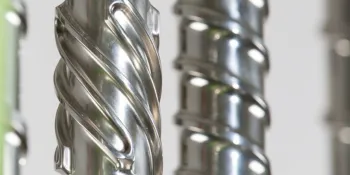
Plasticising in ENGEL quality: the components for your plasticising unit come from our own production plants. Our seamless quality control enables the production of high-quality components for your plasticising unit. You benefit from a longer service life of the plasticising systems and thus achieve more planning reliability.
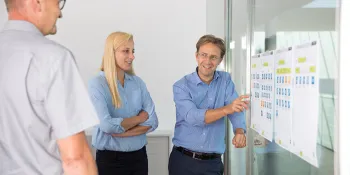
Discover the full potential of your plasticising unit: choose the right training for your team from our comprehensive range of training courses. If you need technical support, our experts in plasticising and application technology are at your disposal. With individual plasticising solutions and competent support for your application, you get the most out of your investment. For reliability, optimum output and satisfied customers.

Our service hotline supports you worldwide at any time. ENGEL service technicians can also remotely check the wear condition of your plasticising unit. You can order plasticising components online in the e-connect customer portal. With a global logistics strategy, we ensure that 95% of orders are on their way to you within 24 hours. This way you avoid unplanned downtimes and keep your production stable.
Your Advantages with ENGEL Plasticising
In-house research and development
Thanks to our in-house research & development department, we can offer solutions from a single source for the entire plasticising process, - including geometries and material design. This enables us to exactly meet your requirements. With injection moulding simulations, we jointly ensure the implementation of your injection moulding process right from the start of the project. In this way, you reliably achieve high performance through short cycle times, low scrap and little wear.
Quality control for durable components
Plasticising in ENGEL quality: the components for your plasticising unit come from our own production plants. Our seamless quality control enables the production of high-quality components for your plasticising unit. You benefit from a longer service life of the plasticising systems and thus achieve more planning reliability.
Knowledge exchange for optimised processes
Discover the full potential of your plasticising unit: choose the right training for your team from our comprehensive range of training courses. If you need technical support, our experts in plasticising and application technology are at your disposal. With individual plasticising solutions and competent support for your application, you get the most out of your investment. For reliability, optimum output and satisfied customers.
Fast service support & spare parts within 24 hrs.
Our service hotline supports you worldwide at any time. ENGEL service technicians can also remotely check the wear condition of your plasticising unit. You can order plasticising components online in the e-connect customer portal. With a global logistics strategy, we ensure that 95% of orders are on their way to you within 24 hours. This way you avoid unplanned downtimes and keep your production stable.
Our experts will be happy to advise you on the optimum concept for your plasticising unit.
Customer focus for plasticising with ENGEL

When it comes to the quality and performance of injection moulding machines, the plasticising unit comes into focus. We continuously invest in the expansion of production capacities and in new technologies to be able to respond to individual customer requirements in plasticising.
Plasticisation in practice
Our Portfolio of High-Performance Plasticising Packages
Material packages with Coordinated Plasticising Components
Depending on the material you are processing, we recommend the appropriate package.
Basic material package: optimally suited for non-reinforced plastics (e.g. PE)
Advanced material package: for reinforced plastics (e.g. PA with 30% glass fibre content); the right solution for abrasive and also corrosive wear
High Performance material package: stands for high abrasion and corrosion resistance and is suitable for highly reinforced and corrosive plastics (e.g. PEEK with 60% glass fibre content).
More about plasticisation in our brochure

FAQ
Plasticisation is the process step in which plastic granules are melted and homogenised in the plasticising unit. The rotation of the screw generates pressure and shear heat, which, together with the barrel heating, transform the granules into a uniform, processable melt. This thus forms the basis for every subsequent injection process.
If the granules are not sufficiently homogenised during plasticisation, temperature variations or unmelted particles remain in the melt. The consequences are directly visible on the component: weight variations, air entrapments, discolouration or incomplete mould filling. Stable plasticisation is therefore a fundamental prerequisite for consistent component quality.
Plasticisation takes place in the screw, which is divided into feed, compression and metering zones. An interesting fact here is that the majority of the heat required to melt the material is not generated by the barrel heating, but by friction as the screw rotates. The geometry therefore plays a decisive role in determining how homogeneous the melt ultimately becomes.
If the material remains in the barrel for too long, it may undergo thermal decomposition. If it remains for too short a time, plasticisation is incomplete and the melt is non-uniform (leading to increased wear). The appropriate residence time depends on the screw size and cycle time – hence the correct machine design is crucial.
Demanding materials sometimes require reduced shear input without temperature peaks, or precisely the opposite – more shear for greater melting capacity – which pushes standard screws to their limits. Specialised screws with additional mixing elements or different pitch, flight depth, zone configuration or design modifications (twin-screw, barrier screw) ensure a homogeneous melt even at high throughput rates.

What else you might be interested in
-
 ENGEL Brings Innovations in Plasticising to Fakuma 20249 October 2024At the “Plasticising” Expert Corner, ENGEL will introduce new technologies aimed at further increasing efficiency, preci ...
-
 Blog
 Susanne Zinckgraf7 September 2022Interview: Heart of the injection moulding machine, the plasticising unit7 September 2022The plasticising systems area is essential for good component quality and increased machine performance. Bianca Gubi is ...
-
recycling
-
service & support
-
cost effectiveness
12 minutes -
-
 Blog
 Stephen Zylinski27 October 2021Plastics & plasticising: Our total solution27 October 2021We would like to respond even better to your individual requirements in the plasticising of plastics. That's why our int ...
-
consultancy
-
service & support
-
recycling
6 minutes -